

Choosing the right HVAC system for your commercial building in Fort Myers, FL has more implications for your company than you may think. The choice you make will impact energy costs, tenant comfort, and long-term maintenance. Traditional rooftop units (RTUs) have been the standard for decades. However, newer technologies like Variable Refrigerant Flow (VRF) systems offer significant advantages in certain situations. Both can be effective, but the right choice for you depends on your building’s layout, budget, and operational needs.
Understanding the key differences between these two commercial HVAC systems is the first step in making a wise investment. This comparison will help you determine the system that best aligns with your property’s demands and provides reliable cooling in the intense Florida heat.
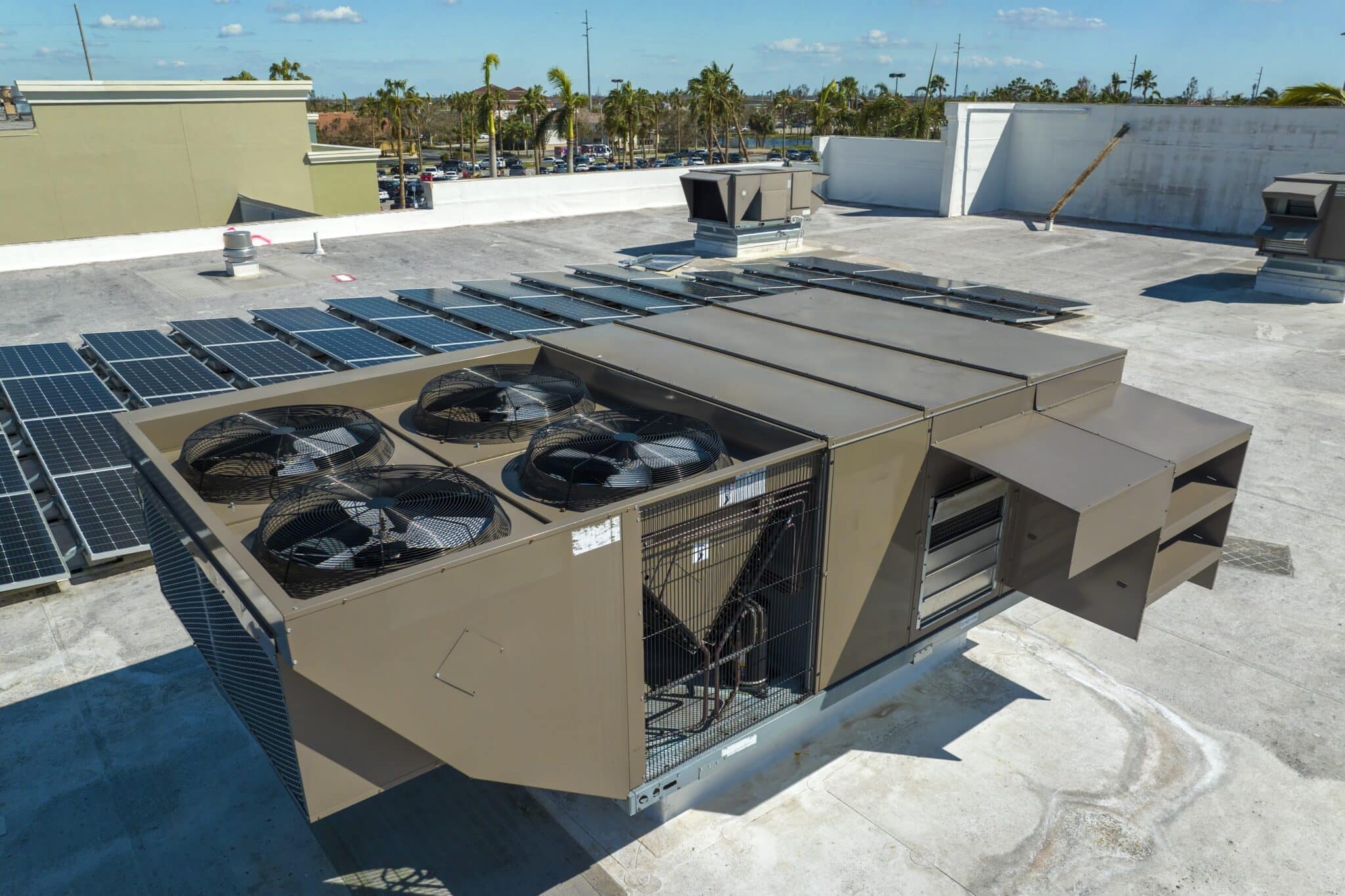
What Commercial RTUs Do Well
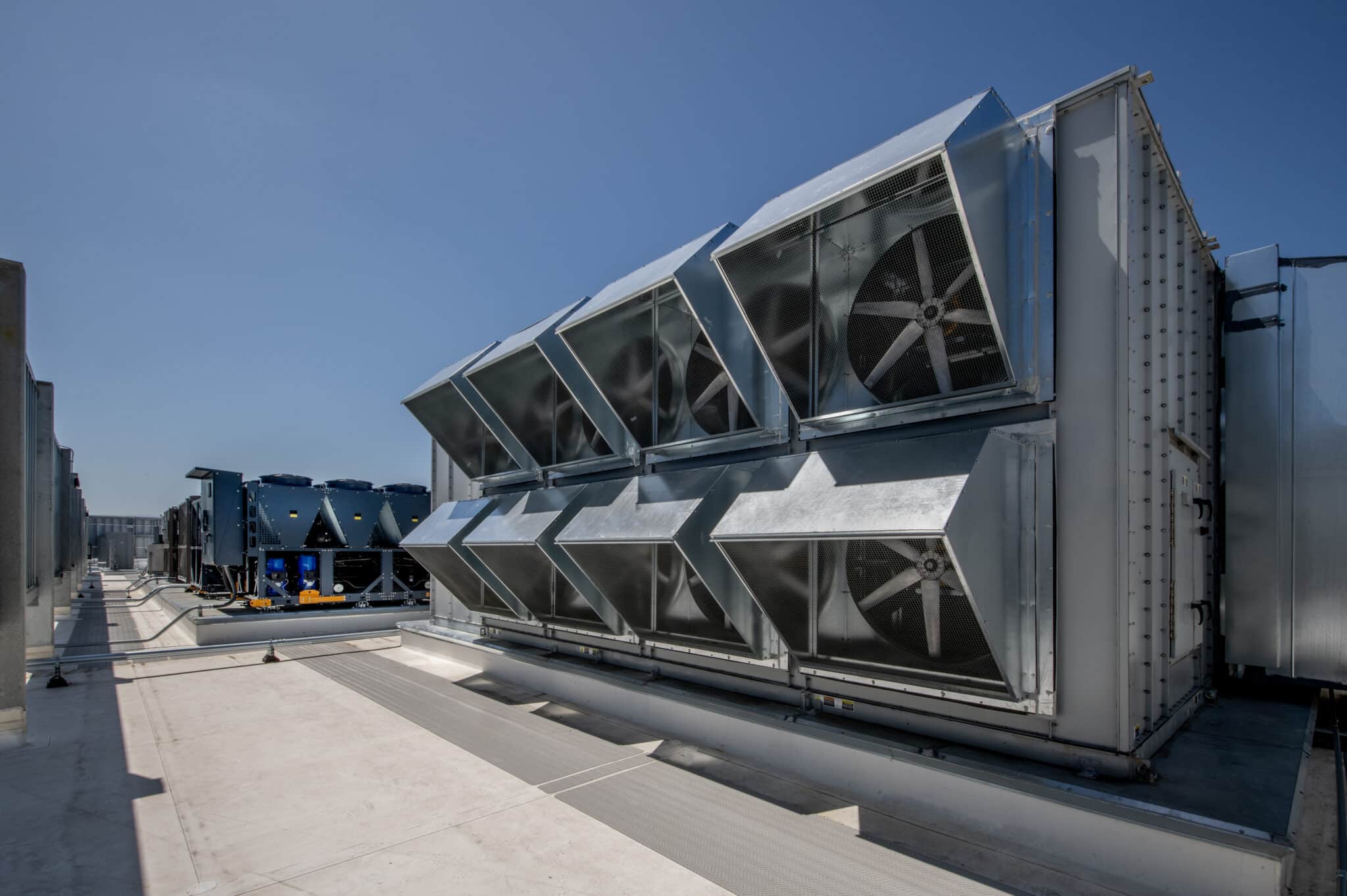
Rooftop units are common on commercial buildings for good reason. These all-in-one packaged systems include the compressor, condenser, and air handler in a single cabinet. This makes them relatively straightforward to install and service. Placing them on the roof frees up valuable interior space and keeps operational noise away from your tenants.
RTUs excel at providing powerful, centralized cooling for large, open spaces like big-box retail stores, warehouses, or offices with uniform layouts. By moving a high volume of conditioned air through ductwork, they reliably cool a large area from a single point. For many properties with simple zoning needs, an RTU’s reliability and proven performance make it a practical, cost-effective solution.
What VRF Systems Do Differently
A VRF system takes a more distributed and precise approach to heating and cooling. It circulates only the amount of refrigerant that is absolutely needed to cool or heat individual zones. A single outdoor condenser unit connects to multiple smaller indoor air handlers that can be controlled independently.
This design allows for a high degree of flexibility. Different rooms or zones can have unique temperature settings, and some VRF systems even provide heating and cooling simultaneously to separate areas. The compact indoor units require minimal ductwork, making VRF known for its quiet operation and adaptable installation, similar to large-scale ductless systems.
When VRF May Be the Better Fit
VRF technology excels in buildings with complex or varied comfort requirements. Its ability to create precise temperature zones makes it an excellent fit for Southwest Florida properties where sun exposure varies dramatically from one side of a building to another.
- Offices with private and open areas
- Medical facilities with varied climate needs
- Hotels or multi-family residential buildings
- Historic properties with limited ductwork space
- Mixed-use spaces with diverse tenant needs
In these scenarios, cooling only occupied zones to specific temperatures improves energy efficiency and can lead to significant long-term savings.
When a Traditional RTU May Still Make Sense
Despite the advanced features of VRF, a traditional RTU is often the optimum choice. The decision frequently comes down to simplicity, budget, and the building’s design. An RTU is a practical and economical option for facilities with large, uniform spaces.
If your building has existing ductwork and structural support, replacing an old RTU with a new, high-efficiency model is a fast, budget-friendly project. The powerful, centralized cooling of an RTU is ideal for large industrial spaces, distribution centers, and single-tenant retail locations. The upfront cost is typically lower, and most technicians are familiar with their service requirements.
How to Choose Between VRF and RTU Systems
The final decision should rely on a comprehensive analysis of your building’s needs, not just on technology. A professional HVAC evaluation is essential to determine which system will deliver the best performance, efficiency, and return on investment for your property.
An experienced technician will assess factors like your building’s insulation, window placement, occupancy patterns, and existing infrastructure. They perform heat load calculations to ensure the system is sized correctly and discuss your long-term goals. This detailed assessment provides the data needed to recommend either a VRF system or a traditional RTU.
Compare VRF and RTU Options for Your Commercial Building
Both VRF systems and RTUs are powerful tools for keeping commercial properties comfortable. An RTU offers a robust, centralized solution for large spaces, while a VRF system provides zoning flexibility for buildings with diverse needs. The right choice depends on a careful evaluation of your property’s characteristics and business objectives. At Caloosa Cooling, our licensed technicians have the expertise to help you choose the right option for your business. We provide comprehensive evaluations for property owners and facility managers throughout the Fort Myers area.
If you need help comparing HVAC options for your commercial building in Fort Myers, contact us to schedule a consultation and get a free estimate.
VRF vs. RTU Commercial HVAC FAQs
Our clients often have questions about the pros and cons of VRFs vs. RTUs. Here are answers to some of the most common ones.
What is the main difference between VRF and RTU systems?
The primary difference is air distribution and control. RTUs are centralized systems that cool large zones via ductwork. In contrast, VRF systems are decentralized, using a single outdoor unit to power multiple, independently controlled indoor units for precise multi-zone comfort.
Are rooftop units still a good commercial HVAC option?
Yes. For buildings with large, open layouts and uniform cooling needs, modern high-efficiency commercial rooftop HVAC units remain an excellent and cost-effective choice. They are practical when replacing an existing unit where ductwork and infrastructure are already in place.
How do I choose the right commercial HVAC system?
The best way is to schedule a professional assessment. An expert technician can analyze your building’s requirements, including size, layout, and energy goals, to recommend the most suitable solution. Our team provides expert commercial HVAC services to help you make an informed decision.