

In many Fort Myers office buildings, the west-side offices are baking by 3 p.m. while people in the north-side conference room reach for sweaters. Those temperature swings make it hard to keep everyone comfortable, and they often mean the cooling system is working harder than necessary.
Commercial HVAC zoning divides a building into separate areas with their own temperature control. It gives building owners and facility managers a way to match cooling to how each space is actually used instead of cooling the whole building to one setting.

Why Commercial Buildings Develop Uneven Temperatures
One thermostat rarely works well for an entire commercial building. Each space has its own cooling load, and in a sunny climate like Fort Myers, those differences add up quickly.
- Sunlight exposure: Rooms with west-facing windows heat up quickly in the afternoon.
- Occupancy: A full conference room needs more cooling than an empty office.
- Operating hours: Some areas close at 5 p.m., while others, like server rooms, run around the clock.
- Heat-generating equipment: Kitchens and machinery add heat to the spaces around them.
- Room use: Showrooms, storage areas, and waiting rooms each have different comfort needs.
How Commercial HVAC Zoning Works
Commercial HVAC zoning treats different parts of your building as separate areas, each with its own thermostat or control point. Instead of cooling everything to the same setting, the system sends more cooling where it’s needed and less where it isn’t.
A zoned commercial HVAC system can be set up in more than one way. A properly designed rooftop system can use dampers and controls to adjust airflow to each zone. A variable refrigerant flow (VRF) system gives each zone its own indoor unit. Either approach can help prevent overcooling and wasted energy when it’s designed around the building.
When Rooftop Units Can Support Zoned Comfort
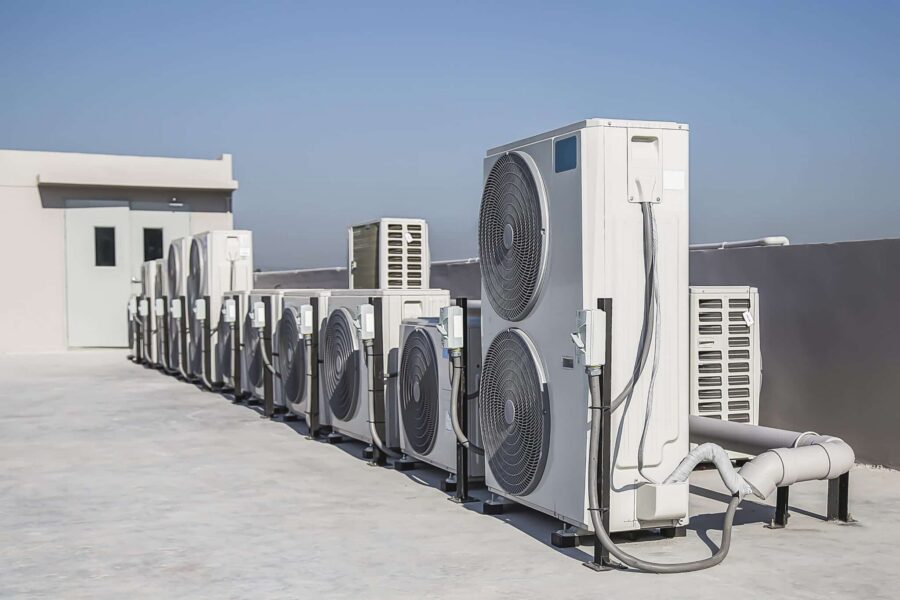
Many Fort Myers commercial buildings already rely on commercial rooftop HVAC units, and these systems can support zoned comfort when they’re configured correctly. A variable air volume (VAV) setup, for example, uses dampers to adjust how much cool air reaches each zone based on its thermostat.
Rooftop equipment often makes sense for buildings with fairly uniform layouts or ductwork that’s still in good shape. Depending on the equipment and ductwork configuration, adding zoning controls may also be possible without replacing the entire system.
When VRF May Be a Better Fit for Multiple Zones
VRF systems use one or more outdoor units connected to multiple indoor units, and each indoor unit can be controlled separately. Heat recovery VRF systems can even cool one zone while heating another, which helps in buildings with very different needs from room to room.
VRF zoning in Fort Myers often works well for medical offices and mixed-use buildings, where zones run on different schedules. It also tends to need less ductwork, which helps in older buildings where adding ducts is difficult. The right choice still depends on the building rather than the technology.
What to Evaluate Before Changing Your Commercial HVAC System
Zoning works best when it’s designed around accurate information. Load calculations for each zone show how much cooling every area actually needs, and they guide proper equipment sizing. Oversized or undersized equipment can lead to humidity problems and uneven comfort, which are hard to ignore in this climate.
Your existing ductwork and building layout also shape which options make sense. Controls matter just as much. Zones only work well when the thermostats and settings match how each space is used. More zones and components also mean more equipment to service, so plan for long-term maintenance from the start.
Request a Commercial HVAC Assessment
A zoned system can help keep employees and customers comfortable while managing energy use, but only if it’s designed for your building. With over 25 years in business, Caloosa Cooling installs and services commercial HVAC systems, including rooftop units and VRF, for properties in Fort Myers and the surrounding area.
We’ll look at your building’s layout and how each space is used, then recommend a zoning approach that fits. That might mean optimizing an existing rooftop unit or installing a new VRF system.
For commercial HVAC zoning in Fort Myers, request a commercial HVAC estimate from Caloosa Cooling. We’ll help you find better commercial temperature control for every part of your building.
Commercial HVAC Zoning FAQs
Can an existing commercial HVAC system be divided into separate temperature zones?
Yes, depending on the existing equipment and ductwork. Some commercial HVAC systems can be retrofitted with dampers and zone controls to provide more precise temperature management without replacing the entire system.
Is VRF always better than a commercial rooftop unit for zoning?
Not necessarily. The better option depends on your building’s needs and budget. Rooftop units with VAV can handle zoning well in many buildings, while VRF works well where zones need fully independent control. Comparing commercial VRF systems with rooftop options for your specific building is the best way to decide.